
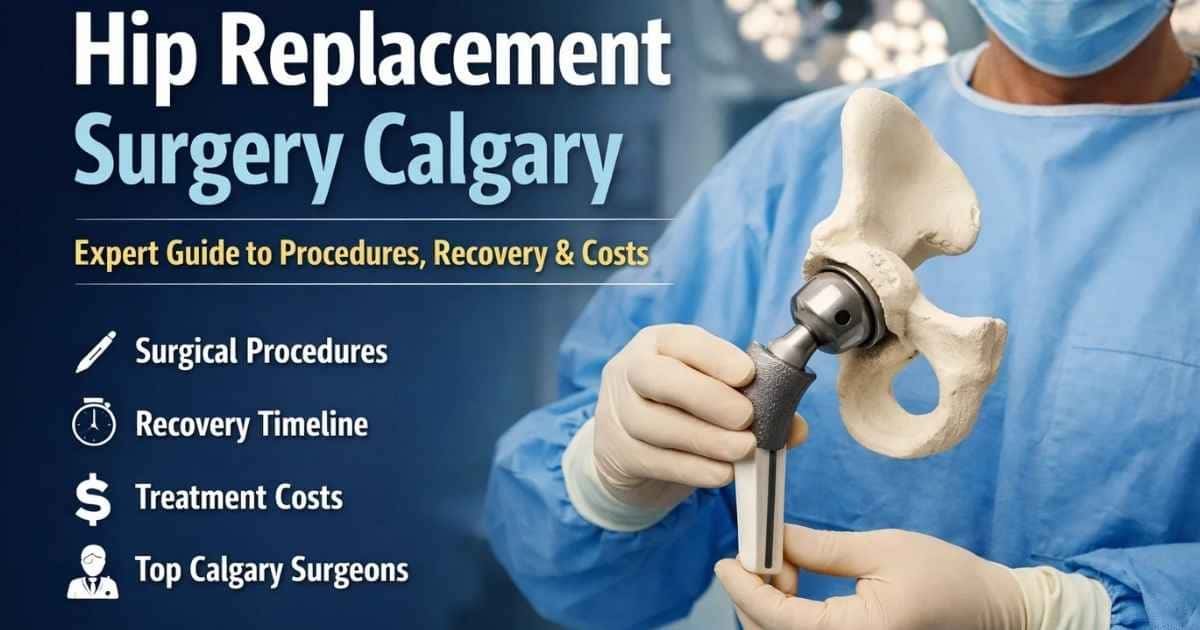
If you have chronic hip pain or limited mobility and live in Calgary, you can find both public and accredited private options for hip replacement that aim to restore function and reduce pain. Public hospital surgery is covered by Alberta Health Care, while private clinics offer faster access at typical costs ranging roughly from $20,000 to $34,000 or more, depending on the clinic and procedure.
In this article Hip Replacement Surgery Calgary You’ll learn how surgeons in Calgary perform modern hip replacements, what to expect from minimally invasive approaches, and how care and recovery are managed to get you back to daily life. This article will help you compare coverage, wait-time trade-offs, and the patient care steps that guide recovery so you can choose the path that fits your needs.
Understanding Hip Replacement Surgery in Calgary
You will find how procedures work, who qualifies, the implant options surgeons use, and how Calgary’s pathway differs from other cities. Expect specifics on techniques, eligibility checks, implant materials, and local system choices.
Overview of Hip Replacement Procedures
Hip replacement surgery replaces damaged joint surfaces to relieve pain and restore function. Surgeons in Calgary perform total hip arthroplasty (replacing both the ball and socket) and partial procedures when only one component is affected.
Minimally invasive approaches, including the direct anterior and posterior approaches, are commonly offered; these aim to reduce muscle damage and speed initial recovery.
Procedures typically take 1–2 hours under regional or general anesthesia. Expect a hospital stay of 1–3 days in most private and many public settings, with early mobilization—walking the day of or after surgery—guided by physiotherapists.
Eligibility Criteria for Patients
You become a candidate when conservative treatments (medication, physiotherapy, injections) no longer control pain or function.
Surgeons assess joint X-rays, the degree of osteoarthritis or avascular necrosis, pain levels, mobility limits, and how symptoms affect daily life.
Medical fitness matters: doctors screen for cardiac, pulmonary, and infection risks, and optimize conditions like diabetes or obesity before surgery.
Age alone is not a strict limit; suitability depends on activity expectations, bone quality, and implant longevity considerations.
Types of Hip Implants
Implants vary by material, fixation method, and design to match patient needs.
Common bearing materials include metal-on-polyethylene, ceramic-on-ceramic, and ceramic-on-polyethylene; each balances wear, fracture risk, and noise.
Fixation can be cemented, cementless (press-fit with porous surfaces for bone in-growth), or hybrid. Surgeons choose based on bone quality and patient age.
Head size and modular necks adjust stability and leg-length restoration. Discuss trade-offs: wear rates, risk of loosening, and suitability for high-activity lifestyles.
Key Differences in Calgary’s Approach
Calgary offers both public and private care pathways, which affects wait time and personalization of care.
Public hospitals follow provincial referral and prioritization systems; private clinics advertise faster access and more scheduling flexibility for elective cases.
Local surgeons emphasize minimally invasive techniques and early mobilization, with access to specialized joint clinics and coordinated rehab services across the city.
You should review facility outcomes, surgeon experience, and whether community or private postoperative physiotherapy is included when choosing care in Calgary.
Patient Care and Recovery Process
You will prepare with medical checks, fit-home planning, and prehab exercises. After surgery you will follow a structured pain plan, early mobility schedule, and physiotherapy program to regain strength and function.
Preoperative Evaluation and Preparation
Your surgeon and preoperative clinic will review your medical history, medications, and recent tests such as CBC, ECG, and any necessary imaging. Expect medication adjustments—blood thinners are commonly paused or managed—and optimization of chronic conditions like diabetes or hypertension to reduce surgical risk.
You should attend a pre-op education class or virtual session that explains the surgical approach, anesthesia options, and expected hospital stay. Arrange home supports: a stable sleeping area on one level, grab bars, a raised toilet seat, and a walker or crutches ready for use.
Begin targeted prehab exercises if recommended: hip range-of-motion, quadriceps and glute strengthening, and walking with assistive devices. Stop smoking and work on a healthy protein-rich diet to improve healing. Confirm transportation and a postoperative caregiver for at least the first 48–72 hours.
Postoperative Rehabilitation
Pain control typically uses a multimodal plan: regional nerve block, scheduled acetaminophen and NSAIDs, and limited opioids if needed. Expect early mobilization—standing and walking with a therapist the same day or the morning after surgery—to reduce complications like blood clots and pneumonia.
Your physiotherapy will progress from gait training and basic transfers to targeted strengthening and balance exercises. You’ll learn hip precautions if your surgeon uses a posterior approach; these may include avoiding hip flexion beyond 90°, crossing legs, or internal rotation for six to twelve weeks.
Occupational therapy will teach safe methods for dressing, bathing, and managing household tasks. You’ll follow a DVT prevention plan: compression stockings, mechanical devices, and possibly short-term anticoagulation. Track wound care and signs of infection; report increased redness, drainage, fever, or worsening pain.
Expected Timelines for Recovery
Hospital stay usually lasts 1–3 days for uncomplicated total hip replacement, with many patients discharged home rather than to inpatient rehab. You should be walking with a walker or cane at discharge and have a physiotherapy plan for outpatient or home-based rehab.
First six weeks focus on pain control, wound healing, and regaining basic mobility. Expect gradual reduction in assistive-device use and improved walking distance by 4–6 weeks. Between 6 and 12 weeks you’ll gain more strength and resume many light daily activities; driving often resumes after clearance from your surgeon.
Full functional recovery and return to higher-demand activities can take 3–6 months, with continuing improvements up to a year depending on your baseline fitness, adherence to therapy, and any complications. Keep follow-up appointments for clinical checks and radiographs as scheduled.
Note: Beriful do not guarantee the accuracy or completeness of this information and are not liable for any loss, damage, or consequences resulting from its use.