
If you suspect you have ADHD Diagnosis Online can get you a clear, evidence-based assessment faster than waiting months for in-person care. You can start with a confidential online screening, meet licensed professionals via telehealth, and receive a diagnostic evaluation and treatment plan without leaving home.
This article will walk you through how online ADHD diagnosis works, what benefits it offers (speed, convenience, and wider access), and where it may fall short compared with in-person evaluation. You’ll learn practical steps to prepare for an online assessment and what to expect from results and follow-up care.
Understanding Online ADHD Diagnosis
Online diagnosis combines symptom screening, clinical history review, and clinician interviews delivered remotely. You’ll learn how assessments work, which steps clinicians take, and which validated tools commonly guide diagnostic decisions.
What Is ADHD Diagnosis Online
An online ADHD diagnosis uses remote appointments to evaluate whether you meet clinical criteria for ADHD. Licensed clinicians conduct structured interviews by video call, review your developmental and medical history, and assess current functional impairments in work, school, or relationships.
You may complete digital intake forms and permissioned records requests before the appointment so the clinician can review past reports, school records, or prior evaluations. Some services provide hybrid options where in-person testing (neuropsychological or cognitive tests) supplements the remote clinical interview when needed.
Regulatory rules differ by region; controlled-medication prescribing may require in-person visits or stricter verifications. Verify licensure, data security, and local prescribing policies before starting an online assessment.
Key Steps in the Online Assessment Process
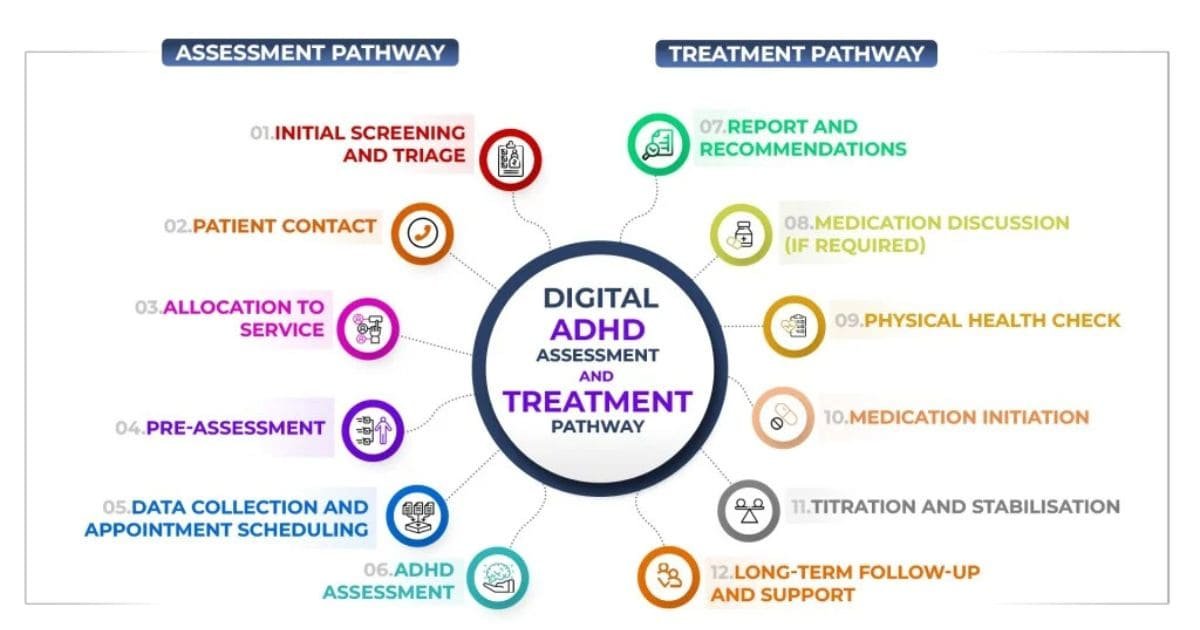
The process typically begins with an online intake: demographic details, symptom checklists, and prior treatment history. Expect requests for school or workplace reports and any past assessments you can upload.
Next, a clinician schedules a live video interview using standardized diagnostic interviews (e.g., DSM-5 criteria review) to map symptoms to diagnostic thresholds. They will probe age-of-onset, symptom persistence across settings, and rule out other causes like mood, sleep, or substance issues.
Afterward, clinicians synthesize questionnaire results, interview findings, and collateral information (from family or teachers) to form a diagnostic impression. They explain treatment options—behavioral strategies, coaching, and medication where appropriate—and provide documentation you can use for work or school accommodations.
Common Screening Tools and Questionnaires
Services often use validated tools that you complete online to quantify symptoms and impairment. Common adult measures include the Adult ADHD Self-Report Scale (ASRS) and the Conners’ Adult ADHD Rating Scales; for adolescents and children, clinicians use versions of the Vanderbilt or Conners’ rating scales completed by parents and teachers.
Clinicians pair these with symptom inventories for comorbid conditions (PHQ-9 for depression, GAD-7 for anxiety) to identify overlapping or alternative causes. Some platforms include brief cognitive or attention tests, but formal neuropsychological testing usually occurs in person when needed.
Ask which specific tools a service uses and whether they gather collateral reports; high-quality assessments combine self-report, informant reports, and clinician interview.
Benefits and Limitations of Online ADHD Diagnosis
Online ADHD assessment can increase access, speed up evaluation, and gather standardized questionnaires remotely while also posing limits around observation, comorbid rule-outs, and provider reliability.
Advantages of Virtual Assessments
You can complete intake forms and standardized symptom checklists from home, which saves travel time and makes it easier to share historical records or school reports electronically.
Telehealth platforms often let you schedule sooner than local in-person clinics, reducing wait times for initial triage or follow-up visits.
Remote care improves access if you live in a rural area, have mobility limitations, or need flexible appointment hours outside typical clinic times.
Many reputable services incorporate multi-informant input (parent/partner/teacher questionnaires) and validated rating scales, supporting diagnostic consistency.
Some providers offer integrated care tools — medication tracking, digital CBT modules, and follow-up messaging — that help you monitor treatment and symptom changes more continuously.
Potential Drawbacks and Considerations
You may lose the benefit of in-person behavioral observation, which can reveal subtle motor issues, social cues, or environmental contributors to attention problems.
Remote assessments can miss nonverbal signs and limit clinicians’ ability to perform neurological or physical exams that rule out other causes.
Diagnostic accuracy depends on the quality of the interview and collateral information; brief screening tests alone are insufficient for a definitive diagnosis.
Regulatory and prescribing rules vary by region; some clinicians cannot prescribe stimulant medications without an in-person visit or established prior relationship.
Privacy and data security matter — confirm the platform uses encrypted communications and clear consent procedures before sharing sensitive records.
Choosing a Reliable Online ADHD Assessment Provider
Look for clinicians licensed in your state or country and check their credentials explicitly (psychiatrist, psychologist, or licensed clinical social worker).
Confirm the service uses full clinical interviews, standardized rating scales, and seeks collateral input when appropriate, rather than relying solely on automated quizzes.
Verify policies on follow-up care: ongoing medication management, therapy referrals, and procedures for emergency or in-person referrals should be documented.
Read privacy policies and ask how your data is stored and who can access it; prefer platforms with HIPAA-equivalent protections or regional data-security compliance.
Check reviews and professional affiliations, and ensure clear pricing and prescribing rules so you know whether the provider can legally manage medications where you live.
Note: Beriful do not guarantee the accuracy or completeness of this information and are not liable for any loss, damage, or consequences resulting from its use.