
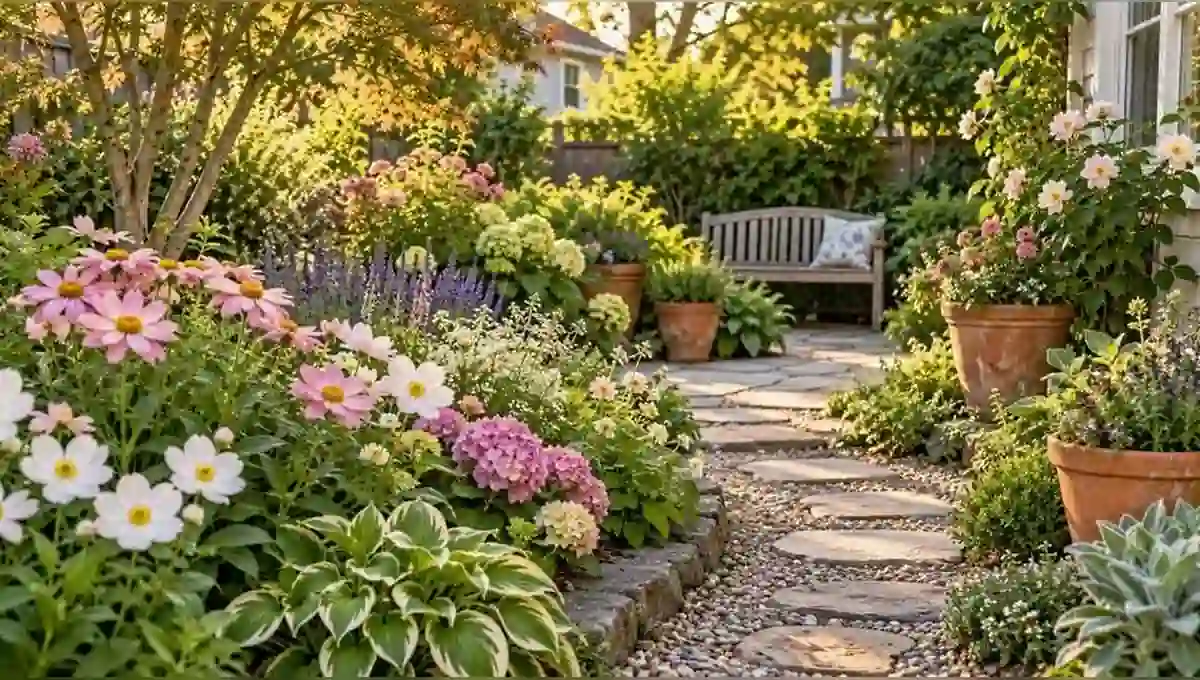
A flower bed can look beautiful from the kitchen window and still offer little to the creatures passing through it. The difference often lies in small choices: which flowers you grow, when they bloom, what you leave beneath them and how brightly you light the garden after dark.
If you enjoy learning about animals as well as plants, the wildlife articles on Viltnemnda offer a starting point for that wider interest. In your own garden, begin with what you can see. Watch which flowers receive visitors and which corners stay quiet before drawing up a shopping list.
You do not need to turn the whole space into a meadow. A flower garden that welcomes wildlife can have a clear path, a comfortable seat and a colour scheme you love. The aim is to make room for food, shelter and water within a garden you can look after.
AI-generated garden illustration; not a photograph of a named garden.
Start With the Garden You Already Have
Spend a few days noticing how the space works. Which part receives morning sun? Where does water collect after rain? Does the back corner stay dry beneath a tree? These details matter more than copying a planting scheme from a photograph.
Draw a rough plan and mark the places you use most. Keep access to doors, bins and washing lines clear. A wildlife feature placed where people constantly need to step over it is unlikely to last, however attractive it looks on paper.
Choose one manageable area for the first changes. It might be a narrow border beside a fence or three containers near a seat. You can learn from that space before spending money across the whole garden.
Keep a Simple Before-and-After Record
Take a photograph from the same spot every few weeks. Add a short note about what is flowering and anything you noticed visiting it. You do not need to name every insect correctly to record that one plant receives more visits than another.
Treat the notes as observations, not proof that a particular change caused every new visitor. Weather, season and nearby gardens also affect what you see. The record is mainly there to help you make your next planting decision.
Choose Flowers for More Than Their Colour
Colour is a good place to begin a design, but flower shape deserves attention too. The Royal Horticultural Society recommends simple, open flowers with accessible pollen and nectar when planting for pollinators. Some heavily doubled flowers have many extra petals that make those resources harder to reach or provide less of them.
You can still keep a favourite decorative plant. Look at the balance of the border rather than expecting each flower to do the same job. Add suitable open-flowered choices alongside the plants you already enjoy.
Check the exact variety before buying. Two plants sold under the same broad common name can have very different flowers, sizes and growing needs. A picture of the mature plant and a clear label are more useful than a vague promise that something is good for wildlife.
Match the Plant to the Place
Use local gardening or conservation guidance to narrow your choices. Plants that suit one country’s climate may struggle or become invasive elsewhere. Locally native plants are worth considering, but check that the species also suits your soil, available light and space.
Think about the plant at full size. A young shrub in a small pot may eventually cover a window or crowd a path. Choosing something that fits from the start reduces the need for repeated heavy cutting later.
If children or pets use the garden, check the safety of each proposed plant before purchasing it. A plant being attractive to insects does not make every part of it safe to touch or eat.
Plan for a Longer Flowering Season
A border bought entirely in flower on one shopping trip can peak all at once. That makes a lovely display for a while, followed by an awkward gap.
Write down the expected flowering period of each proposed plant. Aim for a sequence that fits your local growing season, with some overlap between plants. The RHS advises offering food and shelter through the year where possible; spreading flowering times is one useful part of that approach.
A simple planning sheet can prevent impulse purchases from deciding the whole garden.
| Garden need | What to check before buying |
|---|---|
| Flowers early in the growing season | Local flowering dates and suitability for your conditions |
| Main seasonal display | Flower shape, mature size and available space |
| Flowers later in the season | Whether they fill a real gap in the existing border |
| Structure after flowering | Seed heads, foliage or shelter worth retaining |
| Container planting | Root space, drainage and likely watering needs |
Treat flowering dates as a guide rather than an appointment. Your location, weather and growing conditions can shift the timing. Update the plan using what actually happens in your garden.
Give a Small Space a Clear Layout
A small garden does not need a long list of plants to feel full. Repeating a few suitable choices can make it look more settled than placing one of everything along the fence.
For example, picture a short border beside a patio. You might repeat one low-growing flowering plant near the front, place a few taller plants behind and leave room to reach the soil without stepping into the bed. This is a layout idea, not a fixed recipe: the species and spacing depend on your site.
The RHS notes that pots can also provide useful habitats and planting opportunities. Containers let you work with a paved area, although they still need suitable drainage, compost and regular attention. Choose a number you can maintain through the busiest part of the year.
Before filling pots, decide where they will stand. Leave room for doors to open and for people to move comfortably. Large filled containers can be difficult to shift when the layout turns out to be inconvenient.
Add Shelter Without Losing the Garden’s Shape
Flowers are only part of the picture. The RHS describes gardens as places that can provide food, cover and breeding sites. A completely cleared surface beneath every plant leaves fewer quiet places than a garden with some retained cover.
You might keep a small log pile under a shrub, allow a little leaf litter in an undisturbed corner or retain selected seed heads after flowering. Choose a place where the material can stay rather than repeatedly moving it for appearance alone.
Give that corner a clear boundary. A neat path edge or an intentional planting outline helps the space look cared for even when the planting within it is less tightly controlled.
Do not confuse useful natural cover with discarded rubbish. Remove loose packaging, abandoned netting and other items that do not belong there. The aim is a deliberate habitat feature that you can check and maintain.
AI-generated illustration of a garden corner; features should be adapted to the site.
Offer Water Only If You Can Maintain It
A small water feature can add another useful element to a garden. RHS guidance includes shallow water dishes among ways to help wildlife, with stones providing places for small visitors to stand.
Choose a stable position and keep the water clean and refreshed. Make checking the dish part of the same routine as watering containers. If it becomes a forgotten bowl of dirty water, reconsider whether that feature is manageable for you.
Deeper containers need suitable escape routes for wildlife. Where young children use the space, assess water safety before adding any feature; a decorative appearance does not remove the risk.
You do not have to build a pond to begin. Start with the feature you can maintain properly, and keep any larger project separate from the first round of planting.
Think About the Garden After Sunset
A garden does not stop being used when you go indoors. Some visitors are active mainly at night, while others are often seen around dawn or dusk. This guide to nocturnal animals and their habits explains those differences. Which animals might visit your own space depends on your location and the surrounding habitat.
The Bat Conservation Trust recommends keeping gardens dark where possible and avoiding lighting across areas bats use for feeding or travel. Review decorative lights as well as security lighting. Does a lamp need to illuminate a whole tree, or only the step beside the door?
Where lighting is necessary, direct it toward the area that needs it and limit unnecessary operating time. Keep practical access needs in mind while avoiding light spilling across the entire planting area.
Flowers can also play a role after dusk. The Bat Conservation Trust suggests pale, night-scented flowers as a way to attract nighttime insects. In the UK, bats eat insects, so the connection is through their food supply rather than a promise that bats will drink nectar from your border.
Make Maintenance Part of the Design
An ambitious planting plan is easy to enjoy on paper. The real question is whether you can manage it in an ordinary week.
Keep a short seasonal list rather than a complicated daily schedule. Check the water feature, inspect containers and look for damaged supports or loose materials. Before tidying a sheltered area, look carefully for signs that wildlife is using it.
Avoid changing every part of the garden at once. If you want to try a new layout, start with one section and see how it works for both the plants and your routine. You may find that a simpler arrangement gives you more pleasure and is easier to keep healthy.
When a plant disappoints, ask a specific question before replacing it. Was the site too shady? Did the pot dry out? Did it flower at a different time than expected? A useful answer can prevent the next purchase from meeting the same problem.
Frequently Asked Questions
Can a small patio help wildlife?
Yes. Suitable flowering containers and a carefully maintained small water feature can add useful resources. Start with the space, light and care you can provide rather than trying to recreate a large garden in pots.
Does a wildlife garden have to look untidy?
No. Clear paths, repeated planting and maintained edges can give the garden a strong shape. Leave selected areas less disturbed within that layout instead of treating the whole space in the same way.
Are double flowers always a bad choice?
You can keep flowers you enjoy. For pollinator planting, include suitable varieties with open, accessible flowers as well. Check the exact variety rather than assuming every plant with the same common name offers the same value.
Should I buy all the plants at once?
You do not need to. Starting with a small section makes it easier to learn what works. It also leaves space in the budget for plants that fill flowering gaps you notice later.
Will these changes bring bats or hedgehogs into my garden?
There is no guarantee. Wildlife visits depend on the species present locally, surrounding habitat and access, among other factors. Focus on providing suitable conditions rather than expecting a particular animal to appear.
What is the best first change?
Choose one improvement you can maintain: add suitable flowers to an empty area, keep a quiet sheltered corner or review unnecessary lighting. A small, lasting change gives you a practical starting point for the next season.

