A home can look spotless and still quietly affect your health.
Many Melbourne households rely on strong chemical cleaners to deal with grease, dust, and bathroom buildup. The reality is, those products often leave behind residues and airborne compounds that linger longer than expected. According to environmental health research commonly referenced by agencies like the EPA, indoor air can be significantly more polluted than outdoor air in some settings, especially when chemical cleaners and poor ventilation are involved.
That’s where House Cleaning changes direction. Not just about appearance anymore, but about how your home actually feels to breathe in.
Eco-friendly House Cleaning is not a trend. It’s a practical shift toward safer ingredients, better air quality, and long-term health protection for families in Melbourne homes.
Let’s break down what actually works, what to avoid, and how to clean smarter without sacrificing results.
What Makes Traditional Cleaning Products a Problem in Melbourne Homes?
Why do “clean smells” sometimes make you feel worse?
Many people associate strong fragrance with cleanliness. But that scent often comes from volatile organic compounds (VOCs), which can affect indoor air quality.
Dr. Emily Carter, an Indoor Air Quality Specialist, explains it simply:
“A clean smell doesn’t always mean clean air. In many cases, it signals chemicals evaporating into your breathing space.”
Common issues linked with chemical-heavy cleaning products:
- Headaches or dizziness after cleaning
- Irritated eyes or skin
- Asthma flare-ups in sensitive individuals
- Long-term indoor air quality decline
In tightly sealed modern Melbourne homes, these chemicals don’t escape easily. They build up.
The Hidden Residue Problem
Most people finish cleaning and assume the job is done. The surfaces look shiny. The air smells fresh. But what happens after you put the bottle away tells a different story.
Chemical residues do not disappear when the cloth goes in the wash. They settle into porous surfaces, cling to fabrics, and evaporate slowly into the air your family breathes daily. This is the hidden cost of “clean.”
Where Residues Hide
Floors collect the most residue. Mopping spreads cleaner across wide areas. As water evaporates, chemicals stay behind. Babies crawl on these floors. Pets lick their paws after walking across them. The transfer from floor to skin to mouth is constant and invisible.
Fabrics absorb residues from upholstery sprays, carpet cleaners, and airborne particles that settle into curtains and cushions. You sit on that sofa. You breathe against that pillow. Chemicals enter your system through skin contact and inhalation without you noticing.
Air carries the lightest particles. Every spray sends a portion airborne. It drifts into other rooms and circulates through ventilation. In a sealed Melbourne home during winter, that same air recirculates for hours or days.
The Health Impact
Immediate effects are easy to dismiss. A slight headache. Watery eyes. A scratchy throat. These feel like minor inconveniences, not warnings. But they are signals. Your body is reacting to something it does not want inside it.
Over time, repeated exposure creates a different pattern. Chronic respiratory irritation. Worsening asthma. Skin conditions that appear out of nowhere. The connection is rarely made because the cause is invisible and the effect is delayed.
Children are especially vulnerable. Their bodies are smaller. Their immune systems are still developing. They spend more time close to the floor where residues concentrate. They touch everything and put their hands in their mouths. The exposure is constant and magnified.
Pets face similar risks. A chemical that barely affects an adult human can have a much stronger impact on a ten-kilogram animal. Their noses are closer to the floor. Their grooming habits mean they ingest whatever settles on their fur.
Why We Keep Using Them
Habit and marketing. Decades of advertising trained people to associate strong smells and bold claims with effectiveness. A product promising to kill 99.9% of germs feels like the safest choice. Convenience plays a role too. One bottle that claims to do everything saves time and mental effort.
But that trust is misplaced. Regulatory standards for household cleaners are not as strict as many assume. The word “fragrance” on a label can hide dozens of undisclosed chemicals.
The Shift in Awareness
More Melbourne households are questioning this cycle. They read labels more carefully. They notice symptoms improve when they switch to simpler products. The awareness is growing.
This is not about fear. It is about knowledge. Understanding what residues are, where they hide, and how they affect your body gives you power to make different choices. You do not need to throw out every product today. But you can start paying attention. You can start shifting, one product at a time.
Eco-Friendly House Cleaning: What Does It Actually Mean?
Eco-friendly House Cleaning focuses on reducing chemical exposure while maintaining hygiene standards.
Instead of harsh synthetic agents, it uses:
- Plant-based surfactants
- Biodegradable ingredients
- Low-toxicity disinfectants
- Microfiber technology instead of chemical-heavy sprays
The goal is simple: clean surfaces without polluting the air you breathe.
This approach is now widely adopted in services like house cleaning In Melbourne, especially in households with children, pets, or allergy-sensitive individuals.
How Can You Start Eco-Friendly House Cleaning at Home?
1. What should you replace first?
Start with the highest-impact products:
- Bleach-based sprays → switch to diluted vinegar solutions
- Artificial air fresheners → replace with ventilation or baking soda
- Strong disinfectants → use hydrogen-peroxide-based alternatives (low concentration)
2. What natural ingredients actually work?
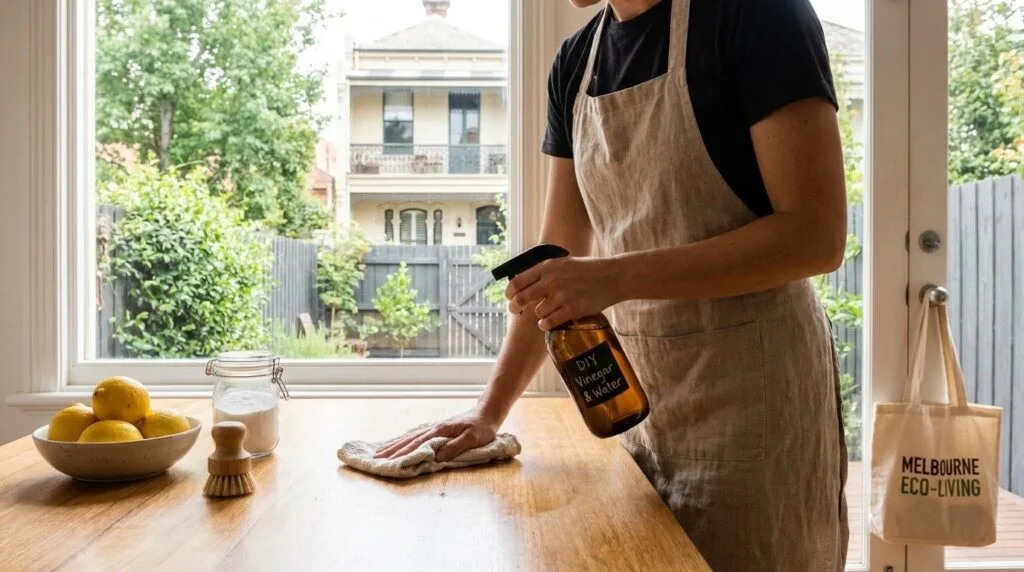
Not all “DIY cleaning hacks” are effective, but these are proven useful in everyday House Cleaning:
- White vinegar: cuts grease and removes odors
- Baking soda: absorbs moisture and scrubs gently
- Lemon juice: natural antibacterial properties
- Castile soap: plant-based general cleaner
3. How do you clean without chemicals effectively?
A simple routine:
- Dust with microfiber cloths (reduces airborne particles)
- Use warm water + mild soap for surfaces
- Disinfect high-touch areas with eco-safe solutions
- Ventilate rooms while and after cleaning
This alone can significantly reduce indoor irritants.
Why Melbourne Homes Need a Different Cleaning Approach
Is the local environment making indoor cleaning harder?
Yes, and here’s why.
Melbourne’s climate shifts quickly between humid, dry, and cold conditions. This variation affects dust accumulation, mold growth, and indoor air circulation.
Key challenges:
- Seasonal pollen increases allergens indoors
- Winter sealing reduces ventilation
- Coastal humidity can encourage mold growth
Eco-friendly House Cleaning helps reduce chemical load while addressing these environmental stressors more gently and consistently.
What Do Experts Say About Eco-Friendly Cleaning?
Dr. Marcus Lin, Environmental Health Researcher, notes:
“Reducing chemical cleaning exposure at home is one of the simplest ways to improve everyday respiratory health without medical intervention.”
Key findings from environmental studies often show:
- Indoor pollutants can accumulate faster in sealed spaces
- Children and elderly are more sensitive to chemical residues
- Regular ventilation combined with low-tox cleaning improves air quality perception significantly
The takeaway is not to overcomplicate it. It’s about reducing unnecessary exposure while keeping hygiene standards high.
What Are the Most Effective Eco-Friendly House Cleaning Habits?
Here’s what actually makes a difference long-term:
Daily habits
- Open windows for 10–15 minutes daily
- Wipe surfaces instead of spraying heavily
- Clean spills immediately to avoid chemical buildup later
Weekly habits
- Deep clean bathrooms with vinegar-based solutions
- Wash bedding in hot water without heavy detergents
- Vacuum using HEPA filters
Monthly habits
- Declutter to reduce dust traps
- Deep clean kitchen appliances naturally
- Check for mold in hidden areas like behind furniture
These habits make House Cleaning more sustainable and less chemically dependent.
Is Eco-Friendly Cleaning Enough for Deep Cleaning Needs?
When should you consider professional help?
Eco-friendly cleaning works well for maintenance. But deeper cleaning situations often require expertise.
You should consider professional services when:
- Moving in or out of a home
- Handling post-renovation dust
- Managing allergy-heavy environments
- Cleaning high-traffic family homes
Services like NDIS Cleaning in Melbourne also play a key role in ensuring safe, accessible, and tailored cleaning for individuals with specific health or mobility needs.
Common Questions About Eco-Friendly House Cleaning
Is eco-friendly cleaning less effective than chemical cleaning?
No. When done correctly, it is equally effective for everyday hygiene. The difference is in safety and long-term exposure.
Does eco-friendly cleaning cost more?
Not necessarily. Many solutions use inexpensive household ingredients like vinegar and baking soda.
Can eco-friendly cleaning kill germs?
Yes, especially when using correct methods like hydrogen peroxide solutions or steam cleaning.
Is it suitable for allergy-sensitive homes?
Yes, it is often recommended for allergy-prone individuals because it reduces airborne irritants.
Final Insight: Cleaning Should Support Health, Not Complicate It
A clean home is not defined by strong smells or harsh chemicals. It’s defined by how safe the air feels, how surfaces support daily life, and how consistently the environment stays healthy without effort.
Eco-friendly House Cleaning is less about perfection and more about balance. Small changes in products and habits can reshape the entire indoor environment over time.
For homes in Melbourne looking to shift toward safer, more mindful cleaning practices, Beaurex Cleaning brings practical solutions grounded in real conditions, not theory.